Ayahuasca is a plant brew used in Amazonian ceremony for centuries — a long, visionary night that people turn to for trauma, depression, and profound self-inquiry. Held by an experienced shaman, in the right setting, it can reach places little else does.
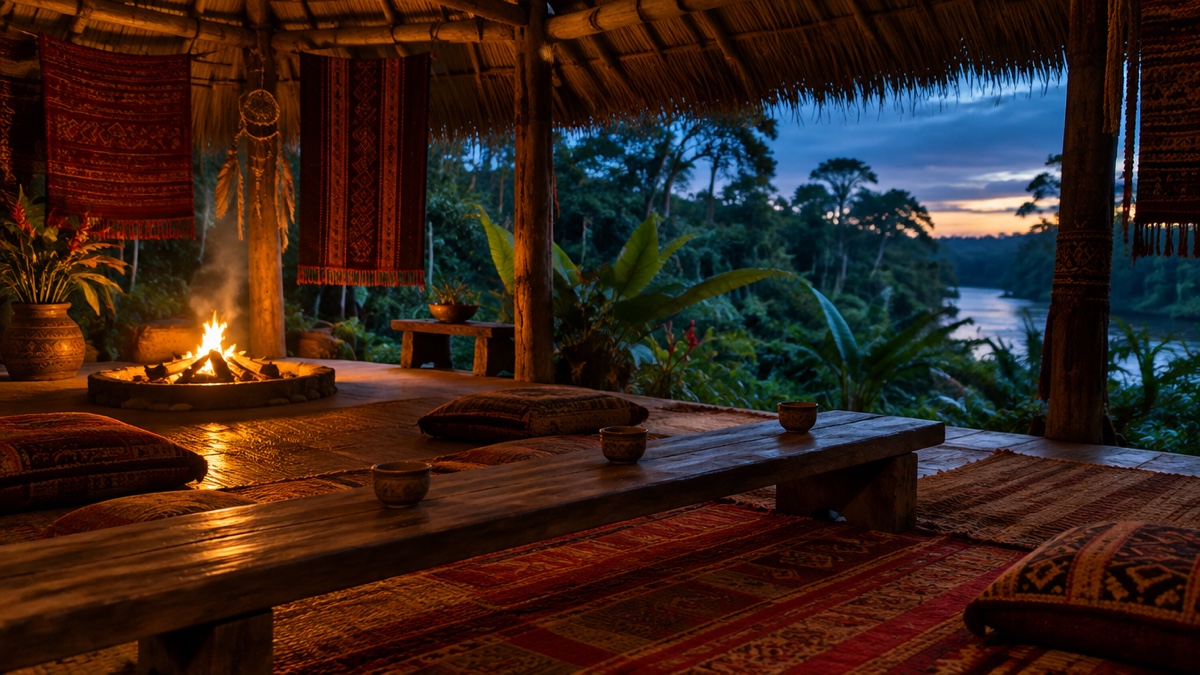
Ayahuasca is a brew of two Amazonian plants: the Banisteriopsis caapi vine and a DMT-containing leaf (usually chacruna). On its own, DMT is broken down before it can act when swallowed — but the vine contains natural MAO inhibitors that let it work orally, unfolding over hours instead of minutes.
Indigenous peoples of the Amazon have used it in ceremony for generations, guided by songs and by a curandero, or shaman. Today people travel from around the world to sit with it for trauma, depression, and meaning.
The extended, visionary state ayahuasca creates seems to let deeply buried material surface — and be seen differently.
The DMT, kept active by the vine, produces hours of vivid, dreamlike visions and deep introspection.
Memories, emotions, and patterns long buried tend to rise — often with a striking clarity about where they came from.
Many experience emotional and physical release — including vomiting, traditionally seen as cleansing what's been carried.
With something this powerful and this long, who guides you — and where — shapes everything.
The people who do this well have led ceremonies for many years — reading the room, singing the icaros that guide the journey, and keeping everyone safe through the night. And the setting matters: in nature, in the jungle, away from noise, so the nervous system can let go.
The days before follow a "dieta" — simple food, no alcohol, and crucially no medications that clash with the brew (especially SSRIs). Screening and intention-setting come first.
Non-negotiableIn the evening you drink the brew and settle in. Over the next 4–6 hours, visions and emotion rise, guided by the shaman's songs. Purging is common and considered part of the release.
Held by a shamanThe intensity eases over the later hours. Many describe a deep calm and clarity as they come back to themselves.
A conversation with the shaman or a guide, and integration in the days after — where the insight becomes real change. Often done over several ceremonies.
Vivid, dreamlike imagery — sometimes symbolic, sometimes autobiographical, often deeply meaningful.
Memories and emotions long buried rising to be seen — and, for many, finally released.
Physical and emotional release, including vomiting — usually followed by a striking sense of lightness.
A profound sense of connection — to others, to nature, to something larger.
It can be challenging in the moment; many describe the difficulty as exactly where the healing was.
A reordered sense of what matters that, with integration, can hold for a long time.
For healthy, screened people in an experienced ceremony, ayahuasca is generally well-tolerated. Its real risks are specific and manageable — the most important being drug and food interactions.
Because the vine is an MAO inhibitor, some medications and foods can be dangerous when combined with it. A reputable ceremony screens carefully and enforces the diet.
Ayahuasca is legal and practiced openly in parts of South America — including Peru, Brazil, and Costa Rica — where much of the ceremonial tradition lives. In the U.S., the DMT it contains is Schedule I, with narrow religious exemptions for certain churches.
Because it isn't broadly legal or in our verified network, this page is educational — here to help you understand the medicine and how it's done responsibly.
Ayahuasca isn't in our verified network — but we're glad to help you understand it honestly, weigh it against other options, and think through doing it safely.
Speak With An Advisor →About 4–6 hours, usually at night, often over two to four ceremonies in a retreat.
It contains MAO inhibitors and can be dangerous with SSRIs and some other drugs; any retreat that does not ask about medications is a red flag.
Ceremonial use is legal in Peru, Brazil and Costa Rica among others; it is Schedule I in the United States.
Ayahuasca is a ceremonial, visionary experience with a gentler cardiac profile; ibogaine is a medical treatment with strong evidence for opioid dependence.