
Is 7-OH Banned? Not Yet — Here’s Exactly Where It Stands
The DEA moved to place concentrated 7-OH on Schedule I as of July 2026. Here's what the order actually covers, what it means for kratom, and what to do if stopping is hard.
Is 7-OH banned?
Not yet nationally: the DEA filed notices of intent in July 2026 to temporarily schedule concentrated 7-OH and related synthetics, and several states have banned it, while whole-leaf kratom is not the target. Anyone dependent on 7-OH should plan a taper or medical exit now rather than wait for the shelves to empty.
Is 7-OH banned? What the DEA just did.
On July 1, 2026 the DEA moved to place concentrated 7-OH into Schedule I — the same category as heroin. Here’s what the order actually covers, the detail most headlines miss, and what to do if stopping is going to be hard.
A targeted action — not a blanket kratom ban.
The DEA filed two Notices of Intent to temporarily schedule concentrated 7-OH and related synthetics, with a Federal Register notice on July 6, 2026 — backed by the FDA and HHS. The detail most headlines miss: it targets the potent, engineered products, not whole-leaf kratom.
If several sound familiar, don’t white-knuckle it alone.
- Needing more to get the same effect, or using throughout the day
- Anxiety, restlessness, or irritability when a dose is late
- Sweating, chills, runny nose, or watery eyes between doses
- Nausea, stomach cramps, or muscle aches when cutting back
- Trouble sleeping, low mood, and strong cravings
- Using to feel normal rather than to feel good
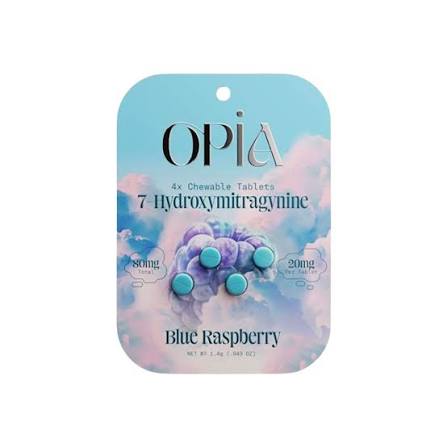
These aren’t “just kratom.”
7-OH is a potent agonist at the same mu-opioid receptors that morphine and oxycodone act on. The targeted products — tablets, powders, gummies, dissolvable strips — are engineered to concentrate or synthesize 7-OH to many times its natural level, producing effects far closer to a conventional opioid.
Because they’ve been sold openly as “natural” supplements, many people didn’t realize how habit-forming they can be — until stopping became difficult.
A real path forward.
A supply that vanishes from shelves doesn’t make dependence vanish with it. These paths are available now — start with the safest.
Supervised detox
Medically managed withdrawal, with medication support where it helps. The right call for meaningful dependence.
Talk it through → Specialized · abroad
Ibogaine, considered honestly
A long underground reputation for interrupting opioid-type withdrawal — but Schedule I in the US, legal only abroad, and only after full medical screening.
Read the safety guide →
Safest first — specialized options last.
Medically supervised detox
The safest first step for real dependence — a clinician manages withdrawal, with medication support where appropriate.
Medication-assisted treatment
Where appropriate, medicines like buprenorphine can ease the transition off opioid-type dependence.
Ongoing program
Outpatient or residential structure to help you stay off after the acute phase.
Specialized options
For those who’ve cycled through conventional care, screened options abroad — like ibogaine — exist, with real risks to weigh.
What this actually means for you right now
The practical takeaways
If you use concentrated 7-OH, the practical takeaways are these: the products targeted are the high-concentration, engineered ones, not whole-leaf kratom below the threshold; availability will tighten, which can make an abrupt, unplanned stop more likely; and an unplanned stop off high-dose 7-OH is exactly the situation where a supported detox helps most. If stopping is going to be hard, you don’t have to white-knuckle it — start with our kratom & 7-OH detox guide or a conversation: (866) 435-7057.
Frequently asked
Is 7-OH banned now?
Not yet. As of September 1, 2026, no scheduling order for 7-OH has taken effect. On July 6, 2026 the DEA published a notice of intent to place concentrated 7-hydroxymitragynine (7-OH) above a specified threshold into Schedule I, and the public comment period was later extended to September 10, 2026. Three related substances — mitragynine pseudoindoxyl, MGM-15 and MGM-16 — were separately placed in Schedule I effective August 26, 2026. If an order covering 7-OH itself is issued, the covered products would become federally illegal to make, sell, or possess.
Is kratom banned too?
No. The action targets concentrated and synthesized 7-OH products, not whole-leaf botanical kratom that contains 7-OH below the threshold. Whole-leaf kratom contains only trace 7-OH; the DEA is going after the engineered, high-concentration products sold at gas stations and smoke shops.
What happens if I stop using 7-OH suddenly?
Because concentrated 7-OH acts on opioid receptors, stopping abruptly after regular use can cause opioid-type withdrawal – anxiety, sweating, nausea, muscle aches, insomnia, and cravings. It is rarely dangerous on its own but can be severe enough to drive relapse. Medically supervised detox makes it far more manageable.
Is 7-OH addictive?
Concentrated 7-OH is a potent mu-opioid receptor agonist and can produce tolerance, physical dependence, and withdrawal much like other opioids. Many people did not realize how habit-forming these products were because they were sold unregulated as natural supplements.
Can ibogaine help with 7-OH or kratom dependence?
Ibogaine has a long underground reputation for interrupting opioid-type withdrawal, but it is a Schedule I substance in the U.S., is only legally available in clinics abroad, and calls for thorough medical screening first — its serious risks concentrate in people with pre-existing heart conditions, which is exactly what screening catches. It is one option among several and should never be attempted on your own. Speak with a qualified advisor or clinician before considering it.
Where can I get help right now?
SAMHSA‘s National Helpline, 1-800-662-HELP (4357), offers free, confidential support 24/7. For guidance on comparing detox and treatment options, you can also speak with our advisory team at (866) 435-7057. If you are in crisis, call or text 988.
Talk it through — starting today.
A short, confidential conversation can help you understand what safe options look like for your situation. Immediate free help is also available any time from SAMHSA’s National Helpline at 1-800-662-HELP (4357).
Related on this site: DEA moves to ban 7-OH · kratom and 7-OH detox · kratom and 7-OH · SR-17018 and the 7-OH detox market · what we do
Sources and further reading
- Federal Register — DEA notices (7-hydroxymitragynine)
- SAMHSA National Helpline (1-800-662-HELP) — free, confidential, 24/7
Speak with an advisor.
A confidential conversation about your situation and the options actually worth considering — from people who visit every provider they recommend.