
Ketamine Therapy for Treatment-Resistant Depression: What to Expect
How ketamine and Spravato work for treatment-resistant depression, who qualifies, what a session feels like, and how to find the right clinic.
What should you expect from ketamine therapy for treatment-resistant depression?
Rapid relief for many — often within hours of the first infusion — from a treatment with two decades of controlled research and one FDA-approved form, esketamine. A typical induction is six sessions over two to three weeks with maintenance afterwards; effects fade without it, and it is a legal US option today.
When the pills stopped working, this is a different path.
If two or more antidepressants haven’t moved your depression, you are not out of options. Ketamine works differently from every pill you’ve tried — and for many people it starts working in hours or days, not weeks.
Faster, and better studied, than most people realize.
Ketamine has more than two decades of controlled research behind it — and one form, esketamine, is FDA-approved. This is a meaningfully different starting point than “wait six weeks and see.”
If several of these sound like you, it’s worth a conversation.
- You’ve tried two or more antidepressants without lasting relief
- Depression that keeps returning, or never fully lifts
- You’re tired of waiting six weeks to find out a medication won’t work
- No unmanaged psychosis or mania, and reasonably stable blood pressure
- Willing to pair sessions with therapy and a real integration plan
- Looking for something that works differently than everything you’ve tried
A different pathway than antidepressants.
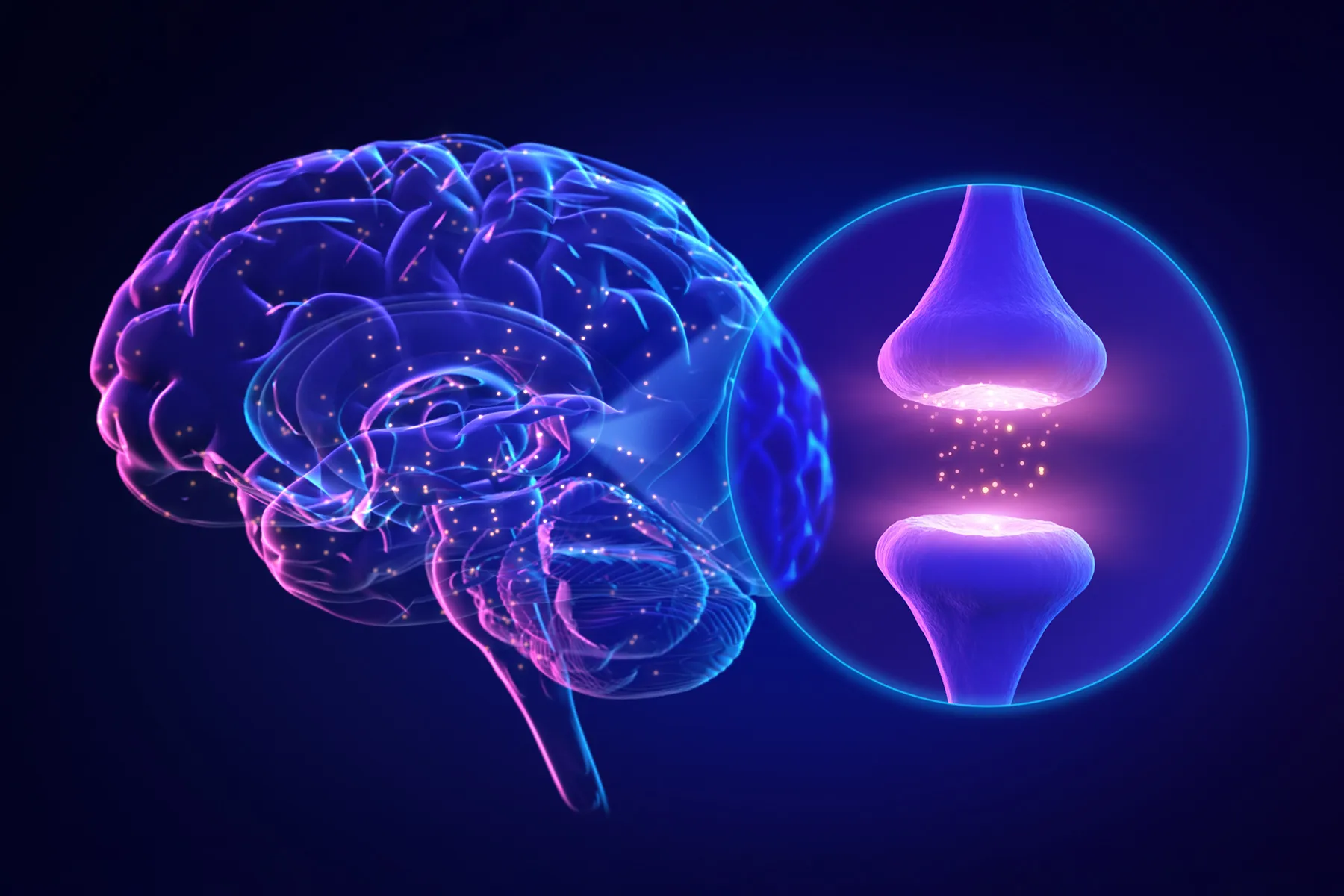
Most antidepressants act on serotonin and take four to eight weeks to build. Ketamine blocks the NMDA receptor, triggering a surge of glutamate that raises BDNF and drives synaptogenesis — the growth of new connections between neurons. Depression and chronic stress erode those connections; ketamine appears to help rebuild them.
This mechanism was mapped by Duman and Aghajanian at Yale (Science, 2012). It’s why ketamine can lift symptoms quickly — though the most durable results come when sessions are paired with therapy and a real integration plan.
Ketamine vs. Spravato — the plain version.
You’ll hear two terms. Neither is automatically better; the right choice depends on your history, insurance, and how a specific clinic runs its protocol.
Esketamine (Spravato)
Approved in 2019 for treatment-resistant depression, given in a certified setting with about two hours of monitoring. More often covered by insurance.
Talk it through →
Off-label · dose-tunableIV ketamine
Given as an infusion over 40–60 minutes, letting a provider fine-tune the dose. Often less expensive per session, though usually paid out of pocket.
Talk it through →
A guided course, not a single dose.
Screening
A real medical and psychiatric intake — history, heart health, medications — before anything else.
Induction
Commonly six IV infusions over two to three weeks, or twice-weekly Spravato in a certified setting.
Integration
Reflecting on each session with a therapist — where the lasting change tends to take hold.
Maintenance
A tapering schedule tailored to how you respond, so the gains hold.
How it works, who it’s for, what to expect
How ketamine works — a different pathway
Standard antidepressants work slowly on serotonin. Ketamine takes a different route — it acts on the brain’s glutamate system and appears to help form new connections between neurons, which is part of why relief can arrive in hours or days rather than weeks. That speed is the reason it’s studied for treatment-resistant depression, where the usual options haven’t worked.
Who’s a candidate — and who isn’t
Ketamine is most often considered when at least one or two standard antidepressants haven’t helped, or when depressive symptoms are severe and time matters. It isn’t right for everyone — uncontrolled blood pressure, certain heart conditions, active psychosis, or a history of substance misuse all call for careful screening first. A good provider screens for exactly these before saying yes.
If you’re unsure which side of the line you’re on, that’s a screening conversation, not a guess — and any provider who skips that conversation is telling you something.
IV, Spravato, or troches — what’s the difference
Three formats come up most. IV ketamine is given in a clinic under monitoring and is used off-label. Spravato (esketamine) is an FDA-approved nasal spray for treatment-resistant depression, given in a certified office. At-home troches (lozenges) are the most convenient and the least monitored. They differ in setting, oversight, cost, and insurance coverage — which is worth understanding before you choose.
What a course of treatment looks like
Most protocols start with an induction series — several sessions over a few weeks — followed by maintenance spaced further apart based on how you respond. Sessions themselves are short; the effects during treatment are temporary, and you’ll need a ride home. The plan is individual, and a provider should set expectations clearly up front.
Before you commit, ask for the whole arc in writing: how many induction sessions, what response they look for before continuing, and how maintenance decisions get made.
After treatment — making it last
Ketamine tends to open a window, not close the case. The people who hold their gains usually combine it with therapy and real lifestyle support during that window. Ask any provider how they handle integration and maintenance — it’s a fair test of whether they’re treating the whole picture or just the appointment.
Frequently asked
Is ketamine therapy FDA-approved for depression?
Esketamine (Spravato), the nasal spray form, is FDA-approved for treatment-resistant depression and is administered in certified settings under monitoring. Generic IV ketamine is used off-label for depression, which is common and legal, but is not specifically FDA-approved for that use.
How fast does ketamine work for depression?
Faster than standard antidepressants for many people. In controlled research, a single dose improved symptoms within hours, with about 71% of patients meeting response criteria at 24 hours (Zarate et al., Archives of General Psychiatry, 2006, n=18). Individual results vary, and effects can fade without a maintenance plan.
Is ketamine therapy safe?
When it is properly screened and medically monitored, ketamine has a well-studied safety profile. It temporarily raises blood pressure and heart rate and causes short-lived dissociation, so a thorough intake and in-session monitoring matter. It is not appropriate for everyone, including people with certain heart or psychiatric conditions.
Will insurance cover ketamine treatment?
Spravato is more often covered by commercial insurance and Medicare because it is FDA-approved for treatment-resistant depression, though prior authorization is common. IV ketamine is usually paid out of pocket. Always confirm the full course cost with the clinic in advance.
How many ketamine sessions will I need?
Most people start with an induction series, often around six infusions over two to three weeks, or twice-weekly Spravato for the first month, followed by a maintenance schedule tailored to how you respond.
What is the difference between ketamine and esketamine?
Esketamine is one molecular half of the ketamine molecule, delivered as the FDA-approved Spravato nasal spray. Generic ketamine, usually given by IV, contains both halves and is used off-label. Neither is automatically better; the right choice depends on your history, insurance, and how a specific clinic runs its protocol.
Does ketamine therapy get you high?
At the doses used for depression, ketamine produces a mild-to-moderate dissociative state — a floaty, dreamlike distance from your body — not a recreational high. It is given in a monitored clinical setting and wears off within an hour or two. Most people describe it as calm and introspective rather than euphoric.
Who is a good candidate for ketamine therapy?
Ketamine therapy is generally considered for adults with major depressive disorder, often treatment-resistant, who have tried at least two antidepressants without adequate relief, have no unmanaged psychosis or mania, and have stable enough blood pressure and heart health, since ketamine temporarily raises both.
Who is not a good candidate for ketamine therapy?
Ketamine may not be appropriate for people with a history of psychosis, uncontrolled high blood pressure, certain cardiovascular conditions, active substance use disorder involving ketamine, or who are pregnant. A thorough clinic screens for all of this before your first session.
What does ketamine therapy feel like?
Most people feel a gentle sense of floating and shifting perception of time, sometimes with dreamlike imagery, while remaining conscious the whole time. A typical IV infusion runs 40–60 minutes in a calm, monitored setting. Short-lived side effects like mild nausea or dizziness fade as the medicine wears off.
How do I prepare for ketamine therapy?
Follow your clinic’s fasting and medication guidance, arrange a ride home since you can’t drive afterward, and go in rested. Because integration is where lasting change tends to take hold, it helps to line up a therapist or integration plan before you start.
Let’s find the right kind of clinic — together.
Talk with an advisor who understands treatment-resistant depression and has seen these programs firsthand. Honest guidance, verified providers, at your pace.
Related on this site: ketamine for depression · ketamine therapy · ketamine therapy near me · depression · ibogaine vs ketamine
Sources and further reading
Speak with an advisor.
A confidential conversation about your situation and the options actually worth considering — from people who visit every provider they recommend.